There Are Many Things That Yank My Chain. 1964 Ain't One Of Them.
There are many things that yank my chain. Some of them are serious topics that I wish I were smart or rich enough to fight – animal cruelty, late capitalism, the Kardashians. Some stuff is less important but irks me nonetheless. The older I get, the more I wrestle with this topic – being affected by external stuff. I’m a fan and an exponent of what is commonly known as The Serenity Prayer. I really do try to ignore that which I cannot influence and prioritise the things I can. Some days are better than others.
One of the conversations which has me continually massaging my melon is the old, ‘best band ever’ chestnut. Or the, ‘best singer of all time’ ping-pong. I find it difficult to have that conversation because we’re talking about art, not sport or commerce. Music is a complex amalgamation of frequencies, tones and volumes, delivered through an infinite range of technics and styles, designed to fire instinctive, uncontrolled and unpredictable microvolts through our synapses. It’s not weightlifting.
In a golf tournament, finding a winner is easy. It’s the person who takes the least amount of shots over the length of the event. In tennis, it’s she/he who wins the majority of the sets. With music, not only is there no finish line, no set timeline, and no points awardable; your audience’s (the judges) changing emotional state, affects the way your product is received. It’s a constantly moving goal post. For me personally, some days, I want to turn Stevie Ray Vaughn up to eleven and rock out like Garth from Wayne’s World, sitting in the passenger seat of Wayne’s AMC Pacer. The very next day, I might not be in the mood for Electric Blues. You might find me blubbering in a corner, listening to Kate Bush trying to talk Peter Gabriel off a tall bridge. As a musician, if the thing you’re aiming your work at is an unstable, emotional tumble dryer, prone to swings in mood and changes in thought processes, how can you even begin to know what kind of style or theme is going to work?
The truth is, as a songwriter, you can’t, or at least, you shouldn’t be influenced by external considerations – what you think the end result should or could be for other people. All you can do is write what moves you. If you’re lucky, it’ll move others too.
And so, when Keith from the internet unequivocally states that Led Zeppelin is the greatest band of all time, I ask by what metric? In an outright rock context, I’d battle to disagree with him but, IMHO, other bands are better at other stuff. When Karen from the down the local is convinced that Madonna is the world’s best singer, I ask – after checking with the bartender how many she’s had – whether she’s considered singers in different styles and genres? I’ve got no problem with someone having a favourite, but that’s different from pronouncing on the GOAT.
The Beatles are a band, however, that tick so many boxes, from so many different angles, that they’d make a good gun-to-the-head, tip-of-the-spear answer for most folks. The Fab Four, The Lads From Liverpool, were perhaps the world’s first pop music superstars. Not as heavy – in their sound – as The Who; and more wholesome and accessible – in the early years of their personal behaviour and their lyrics – than Elvis, Jimmy Hendrix or The Stones. They were four, matching-suit-wearing, managed hairdo, clean-cut, ‘nice’ young men, fronted by a song-writing super-duo, Paul McCartney and John Lennon.
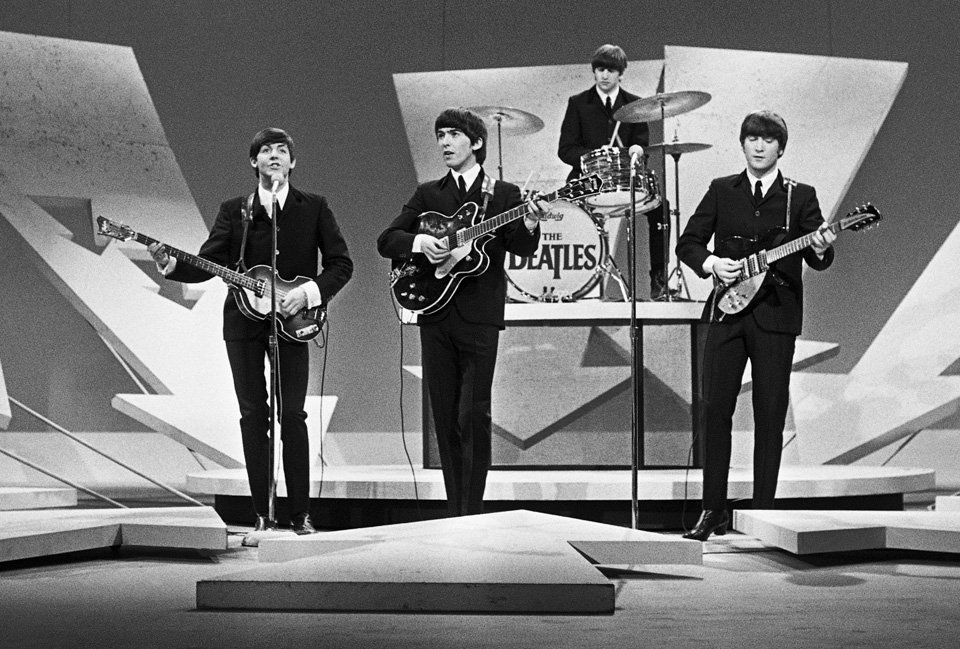
That The Beatles changed the face of music is without question. Their sound and style was fresh, it was different. It’s a common misconception that they were four-chord-wonders – that the songs were written around the most basic musical structure of three major chords and one minor. The Beatles were perhaps nowhere near as sophisticated as The Beach Boys (read Brian Wilson) but certainly more colourful than The Everly Brothers and The Kinks. Their magic, as is so often the case, stems from an almost indescribable combination of chord foundation, memorable, accessible melody – augmented by brilliant, inspired 2-part harmony – and simplistic (pre the introduction of mind-altering lysergic acid and diethylamide), boy-meets-girl lyrics.
As musicians, both Paul and John were always highly rated multi-instrumentalists. Drummer Ringo Star and guitarist George Harrison have not always been at the receiving end of the same unending adulation. Speculation abounds about session players being brought in the play parts in the early recordings, and fairly strong confirmation – quotes by the band members – exists of both Paul and John playing guitar solos or rhythm parts. This was made necessary either because George had stormed out of a session, or on occasion, had gotten his own head around an organ part, leaving the guitar track to someone else.
As we look back at this timeless and gifted group of musicians, there is no doubt as to Harrison’s own beautiful musicality and impressive technique. If we add to his wonderful guitar playing the monumental songwriting skills – While My Guitar Gently Weeps, Here Comes The Sun, My Sweet Lord – there can be no question that George stands shoulder to shoulder with his band-mate giants. Ringo’s quirky, totally unique drumming, again, perhaps more in retrospect than how he was viewed and appreciated at the time, is now understood to be an integral part of the sound and feel of the songs. Were John Bonham (Led Zeppelin) and Mitch Mitchell (Jimmy Hendrix) better players? Technically, yes. But a more complex, dominant drum part may well have shifted the overall sound of the songs in a different direction. A direction that would almost certainly have been detrimental to the overall impact. Ringo was the perfect drummer for those songs. And that circles back and reinforces my point at the beginning of this piece. By which metric are we judging drummers? Power and drive and complexity? Or sensitivity, and mature musicality, complementing the piece they’re a part of?
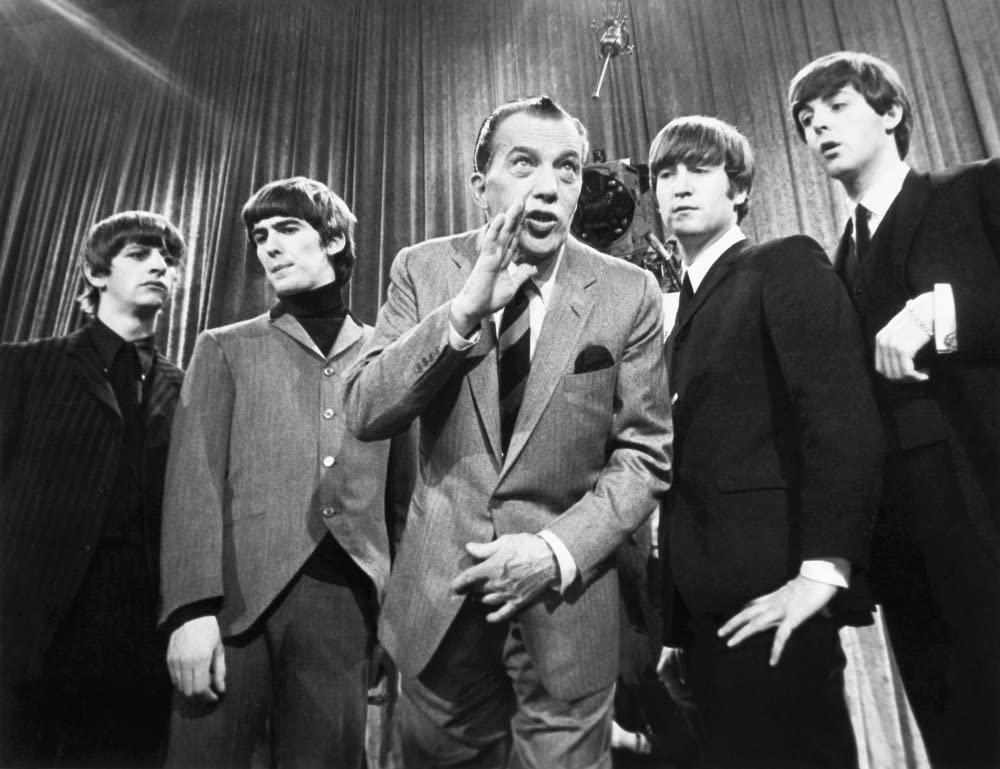
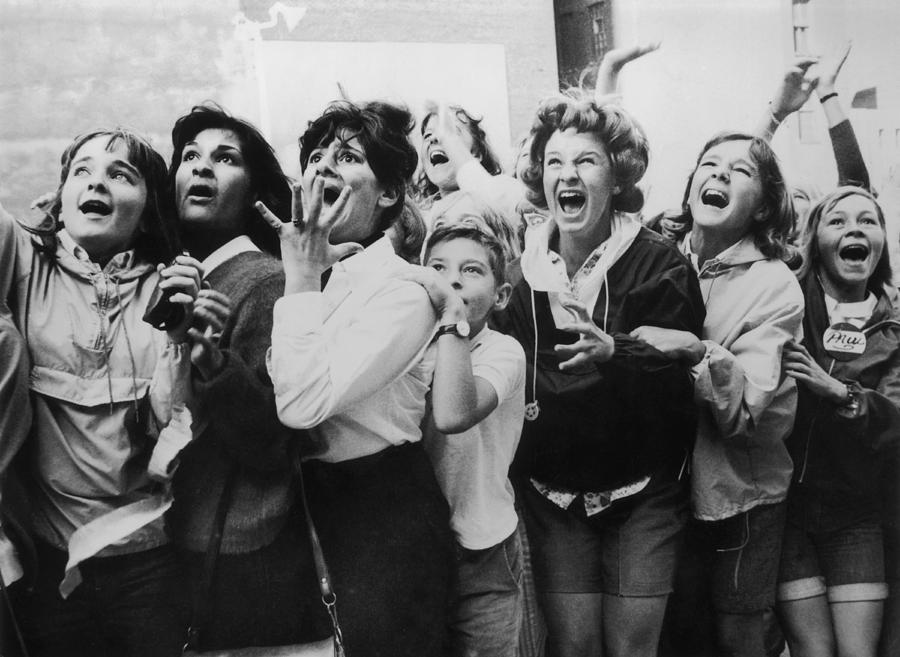
In the early 60s, The Beatles had punched about as hard, on home soil, as anyone could ask. Back in the U.K., Beatlemania had begun. But the real test lay across the Atlantic, and their global birth begins in 1964. At the time, The Ed Sullivan Show was a popular entertainment TV showcase. But it wasn’t yet a musical make-or-breaker; it was essentially a variety act platform. Before the Beatles’ first appearance, it didn’t necessarily carry the weight, for music acts specifically, to build you a tidal wave or blow you out of the water. Many people believe the opposite is true – that The Beatles’ first appearance in February of 1964 simultaneously catapulted the band into the hearts and minds of the 73 million people watching, and gifted The Ed Sullivan Show sky-scrapper status. Either way, the Beatlemania pandemic had now taken hold in the US. No face masks required, no social distancing needed and no vaccine possible.
If 1964 was a good year for Brit-Pop, it was a massive year for a certain fledgling German sports car manufacturer.
Pre-WWll, at the behest of Adolf Hitler, Ferdinand Porsche designed the Beetle. The car, not the band. It’s a cool car with unfortunate roots. I’ve owned two. What we can thank the Beetle for, is that its rear-mounted, air-cooled engine layout so impressed its designer that, for decades, he retained that very same structure in his world-conquering, flagship model. Indeed, right up until 1998, the 911 remained radiator (water cooling) free, and to this day, astoundingly, Porsche continues to mount the engine behind the rear axle.
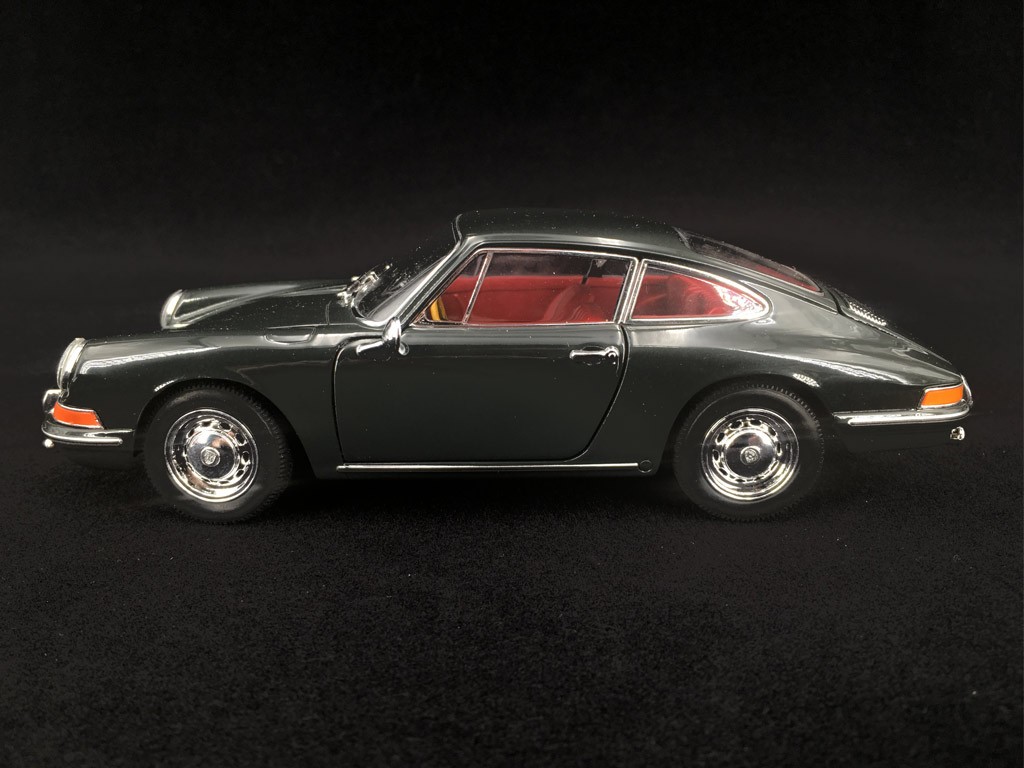
A little like the Beatles, the band, not the car, the 911 works even though it shouldn’t. An important attribute which all sports car lovers (apart from the Americans) would agree with, is the car’s ability to be driven quickly through corners. To this day, the 911 battles a design ‘flaw’ which should almost automatically disqualify it.
The world’s ‘best’ supercars are mid-engined – the motor is mounted behind the front seats and in front of the rear axle. This gives the car better weight distribution and therefore, better balance. Imagine yourself ice-skating through a slalom course with a significant weight chained to your waist and trailing behind you. As you try to change direction, the weight will resist the new heading. Newton’s Laws of Motion require the weight to continue to move in the initial direction. This rear-engined layout is the engineering conundrum Ferdinand Porsche placed in his own way. Kinda like a band walking onto the set of a world-famous TV entertainment show, missing the two E strings on their guitars.
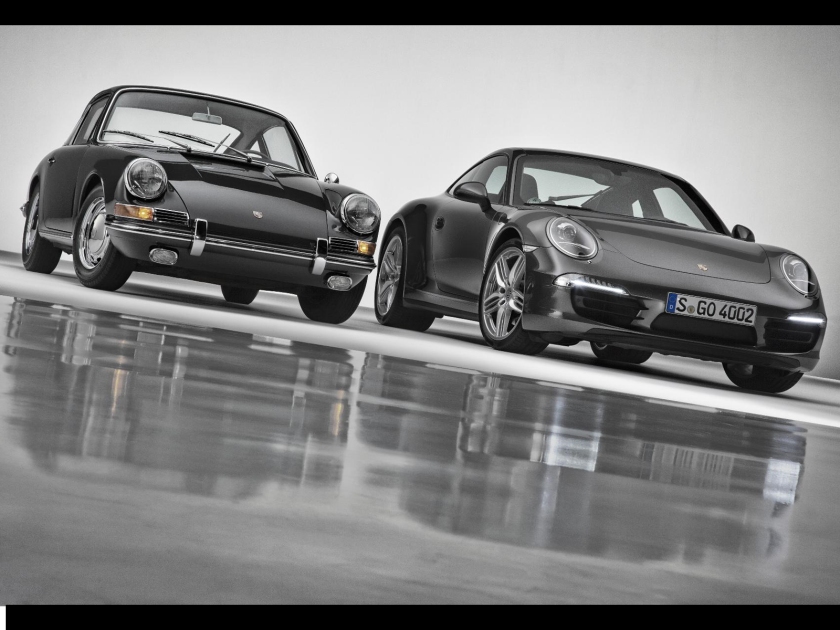
But Porsche persevered. In the early years, old-school chassis ‘tuning’ made the 911 a challenge to drive fast but, if you were good enough, massively rewarding and very quick. Perfectly sprung anti-roll bars, race-quality rubbers and bushes and top-end springs and dampers helped stem the negative effects of the rear-biased weight distribution. I could enter into a passage attempting to explain the difference and effects of sprung and unsprung weight, but that would probably have a fair percentage of you swiping over to BuzzFeed or clicking open your Candy Crush.
As electronics improved, the processor has proved both faster and more reliable, with its ones and zeros, than all but the most gifted drivers are with their hands and feet. Computer-controlled breaking and suspension as well as rear-axle steering have now tamed the once infamous ‘widow-maker,’ and turned it into a very fast car that even an average driver can pilot quickly.
All techno-talk aside, an unending commitment, not only to progress but to the industry’s engineering apex, has kept the 911 relevant. Relevant and brilliant. That basic wee, 1991cc, 2-door that made its sales debut in 1964 has gone on to break sports car sales records and achieve countless major international race victories.
Where record company executives told the Beatles that their sound was dated and irrelevant and that guitar music was on its way out, the sports car world assured Porsche that his rear-engined, air-cooled wee bubble just wouldn’t cut the mustard. Thankfully, in both cases, self-belief and the pursuit of perfection annihilated external opinion.
The 911 was actually launched as the 901. Peugeot, of all people, protested suggesting they’d secured the rights to all three number car names with a zero in the middle. Porsche backed off and renamed their car the 911. I’m not sure why Paul, John, Ringo and George considered The Quarry Men as a name option. We can only be grateful that John and his art college buddy were taken by Buddy Holly’s band’s name (The Crickets) and chose something similar for John and Paul’s new group.
The cult-like following enjoyed by the 911 might not rival Beatlemania for outright hysteria but it’s been influential in its own right. In 1970, the company made the decision to discontinue the 911 in favour of the front engineered, V8 powered, 928. Not only did owners and fans voice their disgust, but even the staff at the factory spoke up loudly enough to shift the corporate thinking. The 911 lived on while the 928 lasted just 17 years. In 1999, the 911 received a ‘facelift’ which altered the shape of the legendary round headlights, in favour of what could best be described as a slightly deformed almond. It wasn’t ugly but again, the 911-ers sang out in disapproval and in 2005, the 911 once again sported round lights.
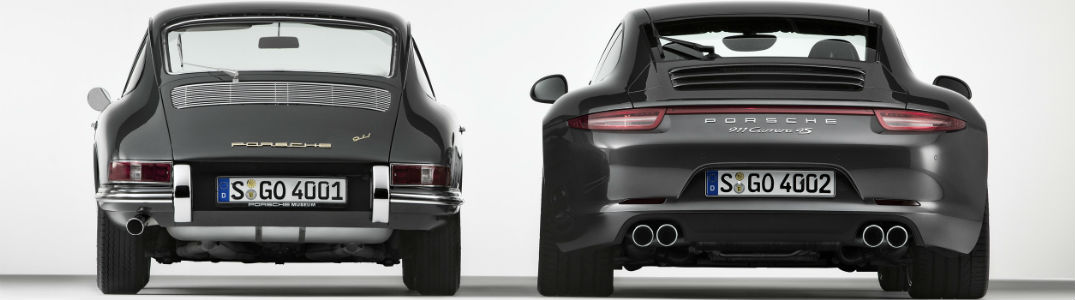
The Beatles are one of the most covered bands in history with various current articles naming a number of Beatles tunes in their Top 10s. A 2017 Mentalfloss.com article suggests that Yesterday has been covered more than 2000 times. In a similar way, vintage Porsche 911s are being restored and, in some cases, almost entirely re-engineered, and aimed at the rich and shameless. Companies like Singer, RUF, Canepa and Lanzante will all relieve you of hundreds of thousands of Whatever-It-Is-You-Earns and make you wait longer than it takes to a mommy Elephant to build an offspring for a modernised 911.
So, 1964 was clearly a good year. President Lyndon Johnson signed the Civil Rights Act into law. Martin Luther King was one of the most influential men in America. Roald Dahl published Charlie and the Chocolate Factory. And the U.S. Surgeon General began telling us that cigarettes were potentially bad for us.
Also, in 1964 The Beatles told us that money can’t buy us love.
Ferdinand Porsche: Hold my beer.
