The Kings are Born - Highlights of 1955
And so it came to pass, I’ve become a blogger. I’d like to be able to say that the decision as to what to blog about was a tough one. But in truth, it really isn’t. I’m defaulting to the things that boil the blood – in a good way – in my veins.
It’s not that I’m afraid of a challenge. My soon-to-be-published, debut novel is 88000 words on something I know nothing about – parallel universes – so I’m prepared to put in as many research hours as the next Mac-tapper in creating content but in deciding, I figured I found a gap. An opening. The cool kids call it niching. An untapped theme, just waiting to be burst through the digital crust and light up the interwebs, relegating the hundreds of thousands of would-be Rand Fishkins to the electronic doldrums. A topic so revolutionary, that SEO algorithms would literally shit themselves and line up outside the inboxes of their nearest back-end-badass, begging to be de-bugged.
What is it? I hear you ask. No more suspense! I hear you bay. Well, I’m gonna blog about cars and music. Yes, ok, it’s not ground-breaking. It’s not even unique. But it’s fun. And we need fun.
In analysing why, I can tell you that both cars and music were foundational building blocks of my formative years. My Dad was both a successful recording artist and a motor mechanic. When he wasn’t teaching me how to torque down a cylinder head, he was leading me through Beatles and Everly Brothers tight, two-part harmonies or showing me how to right-hand vamp the Rock n’ Roll groove to Elvis’ Teddy Bear on his (now mine) 1965 Fender Malibu. For as long as I can remember, I was a master of the volume knob and, as soon as I was tall enough to see over the dash, I was best friends with the loud pedal.
I learnt to ride a bicycle kinda late. I leant to swim later than most kids too. But I was 11 when I learnt to drive and younger than that when I could sing along, pretty much in tune, with Casey Kasem’s Sunday night, Billboard Top 40.
The two don’t have much in common, right? Wrong. One word: escape. Music, emotionally, and cars, physically. It’s not that I wanted or needed to run away from my childhood or teenage years, on the contrary. I had a very privileged (not in a financial sense) upbringing. But the ability to be somewhere or someone else, in a very short space of time, ticked boxes for me.
Another word: identity. Music and cars gave me something that other kids didn’t have. I was a fairly average student (I got worse as the years ticked by) but I was a really good singer and better than most of my school-career peers on the guitar. I was ok at sports but I was an outstanding driver and fixer of cars.
And so these two unlikely companions have rolled along beside me throughout my life. Fortunately, I’ve found a way to make a living from both. I’ve involved myself, intimately with their machinations – performing professionally for more than two decades and recording an original music album; and testing and writing about cars
as a motoring journalist. And during those times, as the cliché suggests, not one of those days could have been described as work. It was all passion.
In deciding how to bring these two otherwise unconnected topics together, I thought I’d focus on, among other tethers, specific years. As an opening gambit, I threw a dart at a dartboard – not literally – and landed on 1955.
The world was in a midst of a post-war economic expansion. Nuclear weapons and the Cold War meant that while fingers were hovering over super-dangerous red buttons, the threat of mutually assured destruction and the visibility of ‘the enemy’ provided, in a highly perverse way, a sense of stability. From a Western World’s point of view, we knew who the ‘bad guys’ were. And visa versa. They wore uniforms and lived in barracks and moved around in identifiable military vehicles. They didn’t hide in schools or hospitals. Compared to Al-Qaeda or ISIS, the USSR were an easier foe to live with.
Life was good. Salaries increased. Promotions could be worked for. You could start a business and, provided you were prepared to put in the hours and behave maturely, your business would grow. And as result, folks had folding money and were looking for things to spend it on.
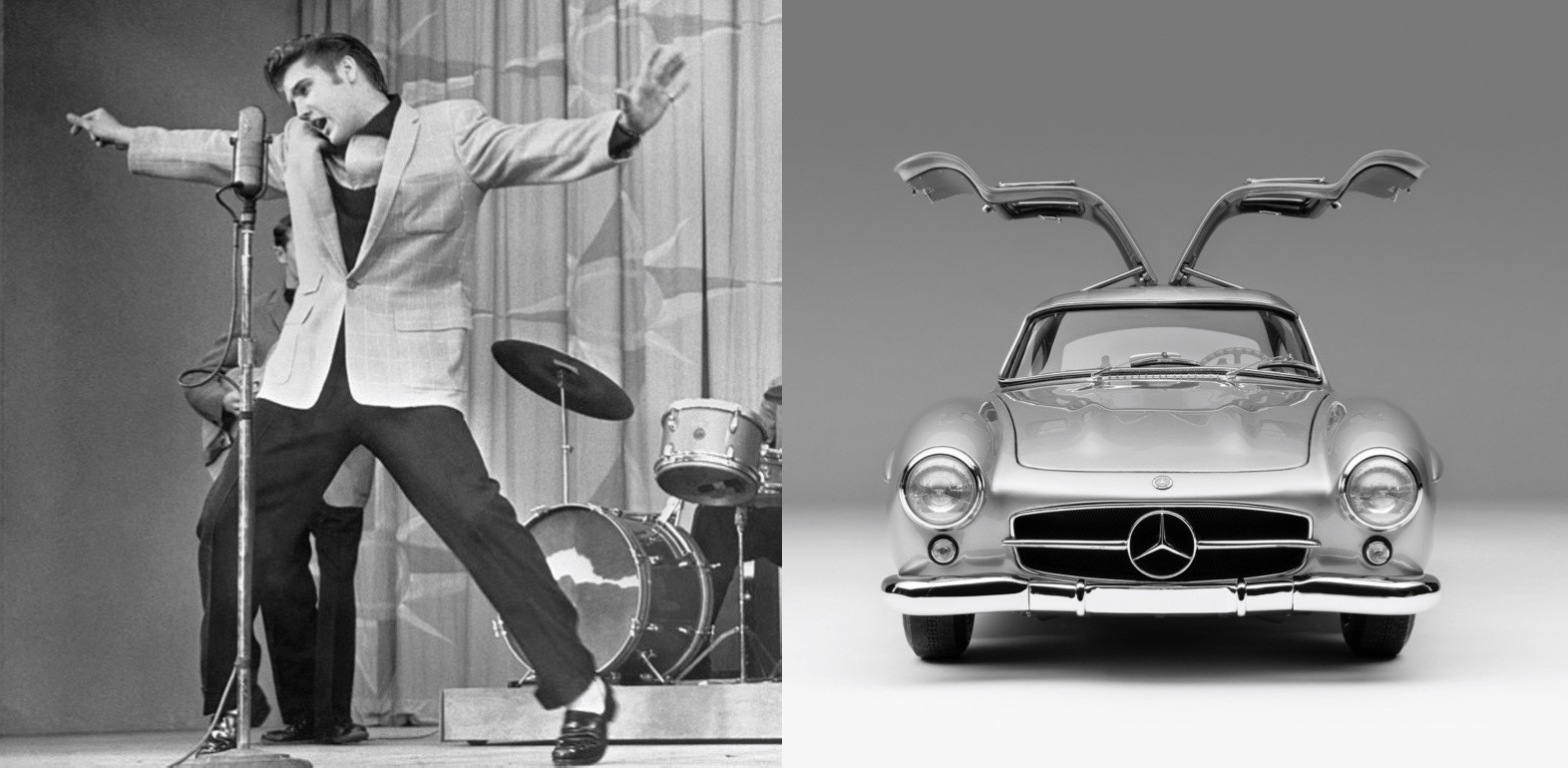
In the worlds of music and cars, in 1955, two stars were born. One, not starting his postnatal journey in 1955 – that happened 20 years earlier – but his ballistic, world-altering music career began in earnest in ‘55. The other was a culmination of decades of industry-leading design, industry-changing engineering and ambitions on auto-world domination.
It’s November of 1955. His management team secure a then unheard of $40 000 record deal with Sun Records. Also in November, at the Country Disc Jockey Convention, he’s named Most Promising Artist. Little did they know. In December, his management play him a demo of a song called Heartbreak Hotel. He would record that song in January of ’56 and it would become his first of 31 USA/UK No 1s, spending 8 weeks in the top slot. We’re talking, of course, about The King, Elvis Presley.
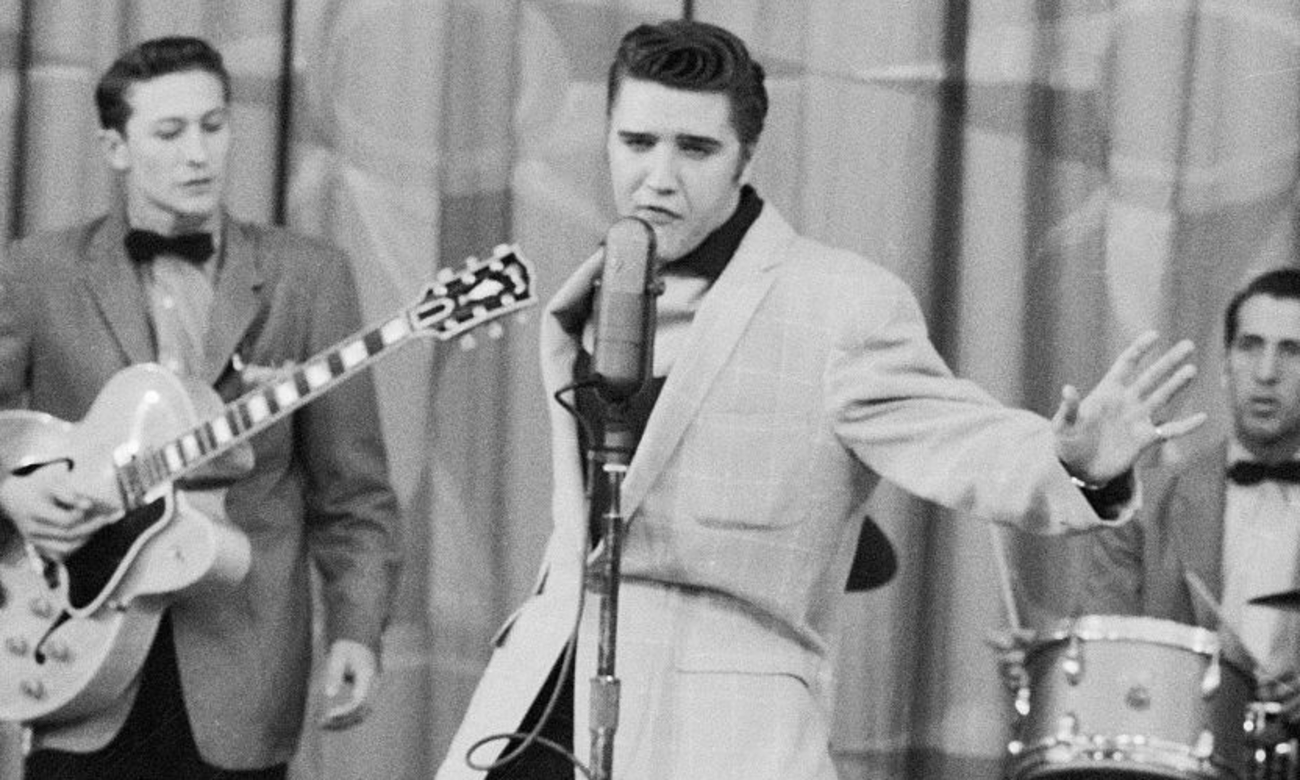
Having spent a considerable amount of time myself, performing on live stage and recording in the studio, my thoughts often drift to what that time must have been like. What they felt in those early, technically limited – although cutting edge at the time - recording studios, while recording songs like Heartbreak Hotel, Hound Dog, and Jailhouse Rock. Were they aware, as it was happening, that they were reshaping the face of music? As they moved the omnidirectional microphone around the room – closer or further away from the drums to get the sound balance right – could they sense the magic they were unearthing? As they thrashed through the song for the umpteenth time (because drop-ins weren’t yet possible), did they know that they were recording music that would live for a hundred years? Were they cognisant of the otherworldly amalgamation of talent and timing, whirlpooling around them, poised to suction the planet’s youth into a journey of song and dance, of discovery and independence, of joy and love, and of emotional and sexual revolution? Surely, they could not have know the full extent, the gargantuan enormity of what Elvis would become. But I bet they all knew they were part of something very special.
Across the Atlantic, in a country yet again defeated and embarrassed, and once again building from scratch, men of steel – mentally and vocationally – were driving Germany’s rebirth. The Paris Peace Treaties, signalling the official end of WWll, signed in 1947, demanded that Germany cease all weapons manufacture. But that astounding, Teutonic engineering IQ still bubbled. It needed an outlet. The burgeoning automotive giant, Mercedes-Benz, was one such valve.
In the early part of the 20thcentury, if you were rich and famous, you wanted to be seen in a Rolls Royce or a Bentley. Mercedes Benz, however, was firing consistent and meaningful shots across the bows of the British elite. The 1928, 7.0-litre, 300hp (in ludicrous tune) SSK was widely considered to be the greatest sports car of the time. To further highlight the standard of engineering floating MB at the time, the SSK was designed by none other than Ferdinand Porsche. Porsche would, of course, move away from Mercedes and on to design the Fuhrer-commissioned Beetle and further upward to build his own sports cars.
Often voted as one of, if not the best sports car of all time, The 300 SL wasn’t aimed at the European or U.K. markets. It was Mercedes-Benz’s chief U.S importer, Maximilian Hoffman, who planted the seed. “What we need over here is a great Mercedes-Benz sports car,” Hoffman is reported to have said.
Five months. That’s all the time it took from when the design and engineering teams were given the green light, till the 300SL’s sensational debut at the International Motor Sports Show in New York in 1954 with the commercial release date set for the following year.
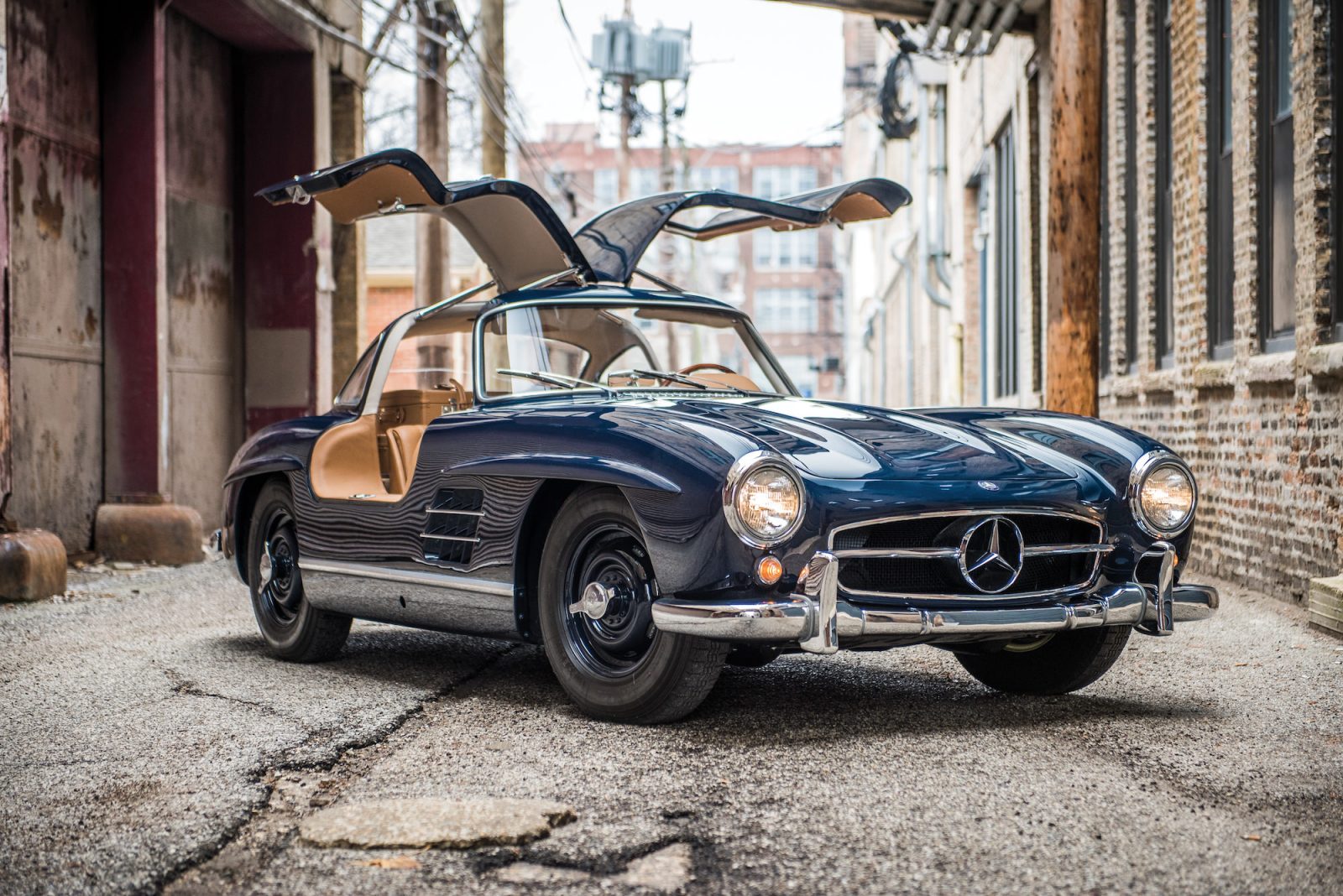
Engineering highlights include the first production, four-stroke engine fitted with fuel injection. Racecar inspired lightweight, space frame construction onto which the 215hp, 2996cc 6-cylinder engine and super-slick drivetrain were bolted. That space frame was ultimately the reason for the achingly beautiful gull-wing doors. There simply wasn’t a good spot to mount conventional hinges.
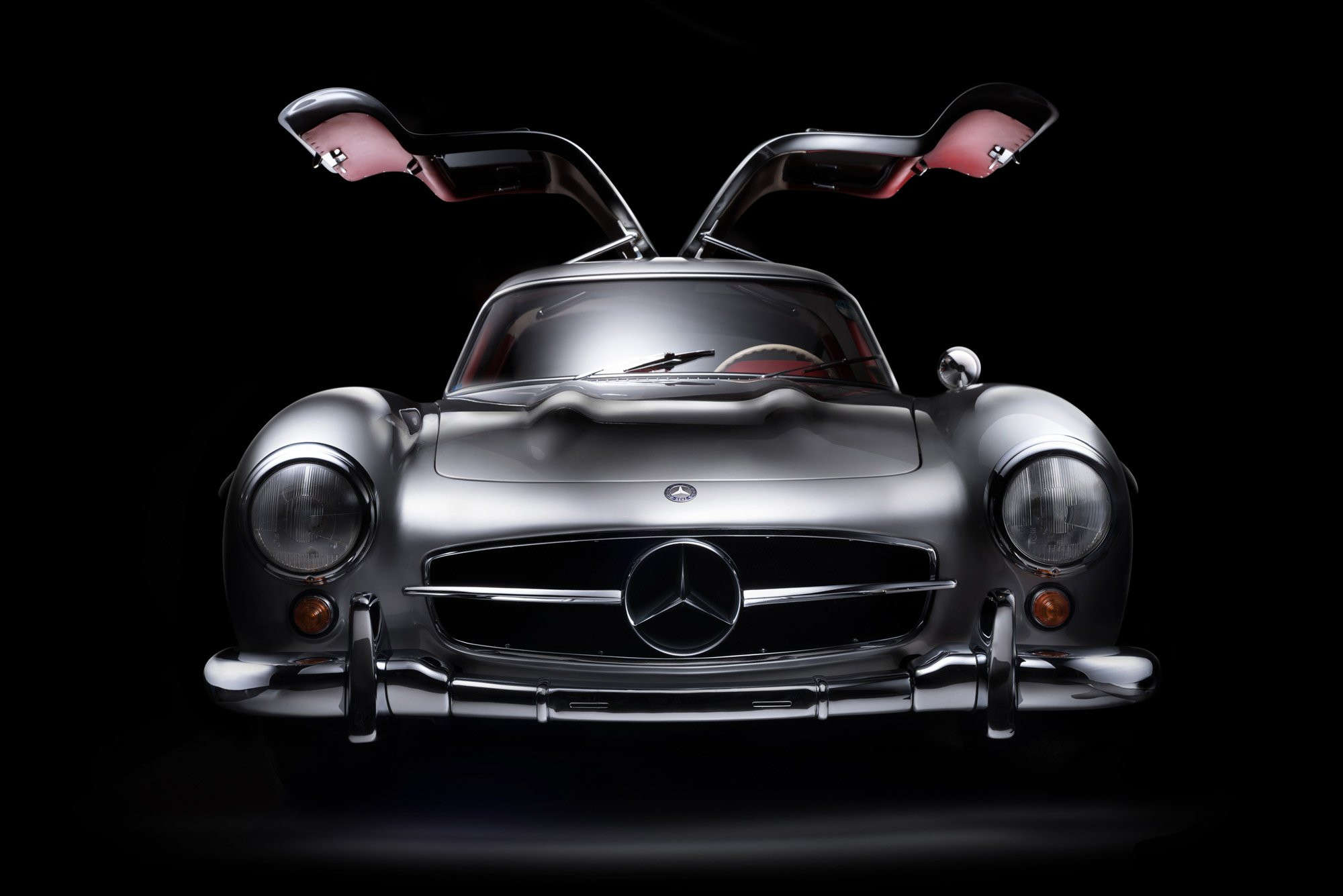
Only 1400 300SL coupes were built. At the time, they were massively expensive. Their value today? If you have to ask, you can’t afford it. At the time of writing, there was a lovely looking, creamy coloured example on the Hemmings website asking nearly $1.4mil.
But great cars aren’t about stats. For me, the 300SL is one of those cars that is always better looking in the metal than in any print photo or TV screen. And every time I’ve been lucky enough to stand near one, it’s better looking than I remember. From every angle, in any (original) colour, it’s as close to automotive perfection as my limited imagination can stretch. The perfectly balanced lines, low, wide profile and hawkish (when open) doors and the sensuous curves and bulges demand your attention without being rapacious. That’s probably this car greatest asset. It just doesn’t seem to have to try that hard. It’s under the radar but totally unforgettable.
Elvis, on the other hand, was, at the time, completely outrageous. A white boy with roguish good looks, a devil-may-care grin, and an RnB/Gospel vocal feel – gyrating, arm-swinging and sidestepping his way onto the bedroom walls of teenage girls the world over. A golden timber and masterful control, Presley was technically, incredibly gifted.
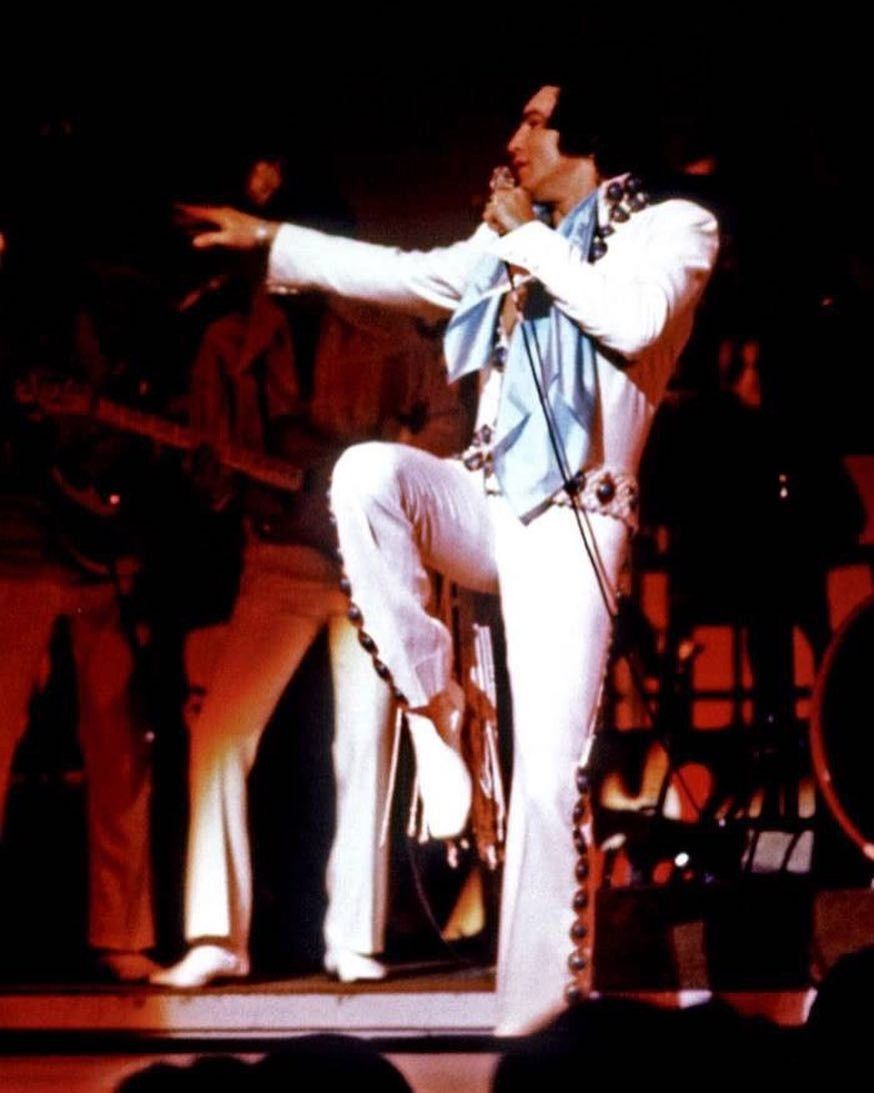
But similarly to the 300SL, you don’t analyse Elvis technically. Reality TV has sullied the term, X-factor, but The King was potentially the world’s first identifiable example of it. Someone whose every move, every word, every project seemed bathed in gold and destined for collective adulation. In all honesty, as gifted as the man was, he couldn’t act. Yet he starred in nearly 50 films. He was a global icon, a voice (not only musically) of a generation and a shaper of cultural rejuvenation and revolution.
And again, in the same way that the 300SL dominated so organically, watching Elvis on stage or listening to his recordings, you know you’re witnessing a culmination of perfectly blended talents and a potpourri of finely balanced abilities – a perfect storm of the right stuff at the right time.
Our world, at times, seems brim-full of imbalance and anger and pain. But it also presents gems and uncovers magic. I can’t afford this car and Elvis died before I could watch him perform live. But I can place them, stationed stoically, in the recesses of my oft-troubled days, perfectly poised to aid my escape.
