Like Giant Redwoods
I was never into posters. As a young boy or teenager, I didn’t have sports cars or rock stars or supermodels adorning my bedroom walls. It wasn’t as though I didn’t have favorites. In all three of those categories, there were cars and bands and women I thought were astounding – although, as a postpubescent, pimple-faced young man, I might have used the word kiff. Either way, I just never got to the point of making a definitive statement as to which one was the shizz.
Looking back on it now, perhaps, even at the age of 8 or 14, or whatever, I was already morphing into the creature I am today – searching, experiencing, wanting a taste of it all; never able to genuinely settle into any kind of structure. As Rock n’ Roll as that might sound, it fits a 25-year-old, longhaired, rock band singer better than it does this current guy. A guy who still reads books printed on paper, can’t lose his tummy fat, uses phrases like ‘the youth of today,’ and is homing in on 50.
Still, as I think back to that young man, falling in love with cars and guitars (and in lust with Brooke Shields) there are names and faces; and talents and achievements and careers that stood tall. Like Giant Redwoods towering over the ever-strengthening thorn bushes and deepening mud pits of teenage life.
As I write these articles, I’m constantly looking for intersecting timelines, for commonality in dates or locations. Imagine my surprise then when I learn how huge a year 1983 was for both my apex guitarist and my favorite racing driver.
The song Tin Pan Alley is nine minutes long and 114 BPM (beats per minute), or a half-time feel of 57 BPM, in 6/8 time. It’s slow. Think of 6/8 time as being very similar to a waltz (3/4 time) but the music runs over two bars before the pattern resolves – starts again. It has only three chords – Bm7, Em7 and F#9. Your clock will run for over two and half minutes before the vocalist comes in. There are only three instruments – guitar, bass and drums. There are no drum fills to speak of and the bass player lays down one of the most basic, foundational patterns any experienced player could possibly imagine. The song is grit-ladened lyrics and lead guitar.
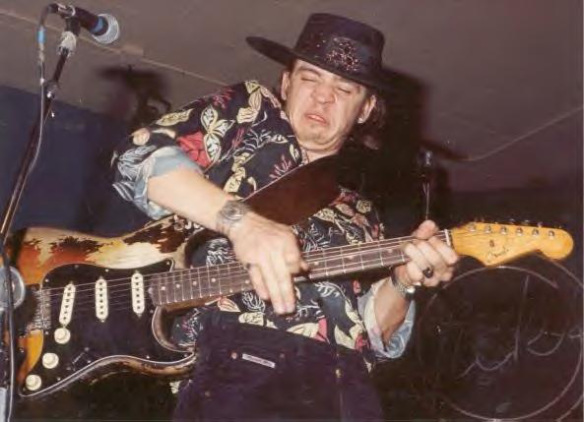
Granted, you need to be a blues-guitar uber-geek to appreciate this level of self-indulgence. But if Fender Stratocaster guitars played through Fender Vibroverb amplifiers (turned up to 11) boils the red blood cells in the very marrow of your make-up, then this piece will have you mesmerised and meditative, regardless of how many times you’ve heard it.
The well-informed among you (or those who recognised the face on the photos) will know I’m talking about Stevie Ray Vaughn (SRV). In this song, Stevie’s guitar tone – an amalgamation of the warmth and David Gilmour (Pink Floyd) and the bite of Jimmy Hendrix – sings soulfully above the sparse but granite foundation. Stevie’s thick, 14 gauge strings (most Fender Strat players use 10s or 11s) give the guitar weight and sustain. His note choice – standard and classic blues scales in the minor key – fails, perhaps, to present anything groundbreaking. But if you’re making black coffee, you don’t use milk. He’s a blues player, playing traditional electric blues. The techniques and the style and voicings are, by default, going to sound the way this music is supposed to sound. It’s mournful, it’s torn, and it’s heartbroken.
The full title of the song is Tin Pan Alley (AKA The Roughest Place In Town). That gives us a clue as to the theme. It was written by Bob Geddins in the early 50s and the first known recording is Jimmy Wilson’s 1953 rendition. To call SRV’s version a straight cover would be unfair. Stevie’s lyrics are very different and the arrangement bears little resemblance, but the basic gist of the two tunes is the same. It’s an evening in the sleaziest, most lawless and debauched bar any of us can imagine. I grew up on the East Rand of Johannesburg in South Africa. The first time I heard this song, I was sure Stevie was singing about my high school’s local, Harvesters.
Tin Pan Alley is off SRV’s second album, Couldn’t Stand The Weather. I say second, but that’s not entirely accurate. Born in 1954, SRV’s career began in the early 70s and his recording career kicked off midway through that decade. But that was as a guitarist in other people’s bands. His solo career – fronting the electric blues power trio, Double Trouble – began in 1983 with the album Texas Flood.
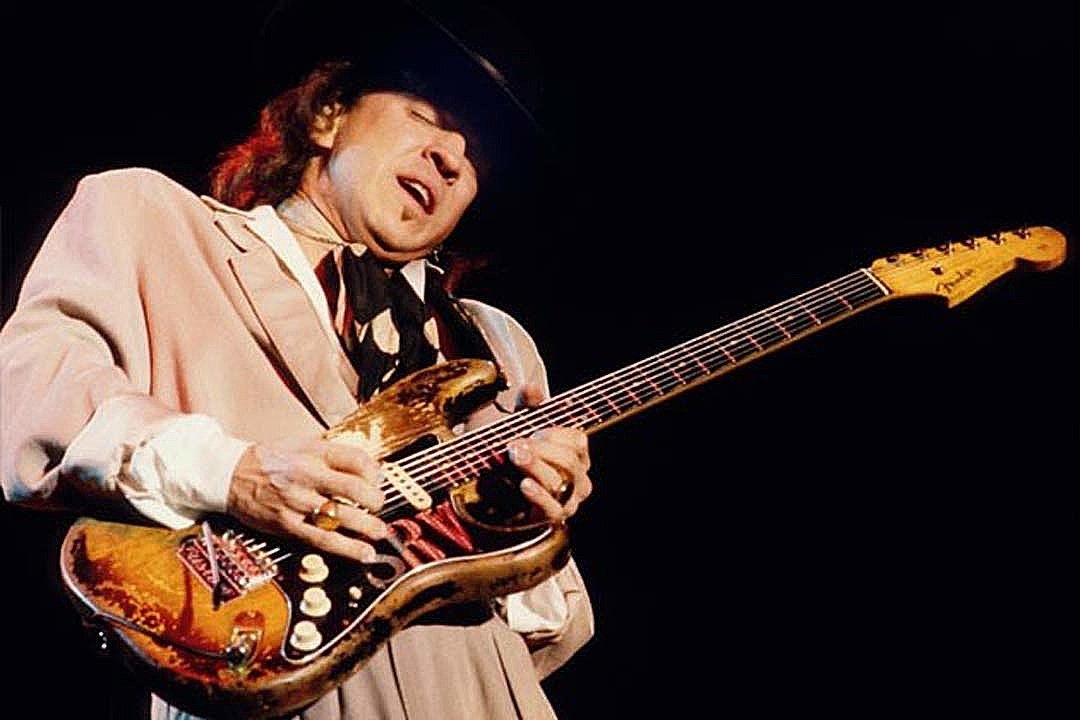
Texas Flood marked the beginning of SRV’s rise to the very top of the Wailing Wall of blues guitarists. The album was recorded over three days in Jackson Brown’s – Somebody’s Baby, Lawyers In Love, Tender Is The Night - studio in LA. Compare that super-rapid process to the time taken for another early 80s release, Michael Jackson’s Thriller. Granted, Quincy Jones and The Gloved One set out to build an entirely more layered and complex album but nonetheless, three days versus seven months is a dramatic difference. Is it that SRV and Double Trouble drummer and bassist, Chris Layton and Tommy Shannon, didn’t care? No. It’s that they wanted the album to have a ‘live feel.’ They planned for it to sound as it might if you heard them playing those songs at a gig. And again, that’s the way blues music is supposed to be presented. Raw. Authentic. In the moment.
SRV has an unbelievable combination of touch and feel, and of time, space and patience. The guitar swims gently as its bleeding heart begs for love and connection. And then, when the sorrow bubbles beyond a point of control, the piece races into anger and desperation. The technique and tone morph into confrontation and aggression. The Strat spits fire and with a razor-sharp edge, it scythes away emotional ambiguity. Passion, tangible. Pure emotion, audible.
This is all made possible by a lifetime spent honing technique and control. But other players have spent that same amount of time practicing and gigging. Why then did Stevie Ray Vaughn stand so much taller?
About 3 hours, by road, North of London, near Castle Donington in Leicestershire, lies one of the U.K.’s best-loved and most storied racetracks, Donington Park. The year is 1983 and Formula 1’s reigning world champions, Williams, are getting their teeth into their preseason shakedown. Unimpeded by modern F1 testing restrictions, the team has rolled in with a full complement of engineers and mechanics to tweak, tighten and make-faster their 1984 title challenger, the Cosworth DFV V8 powered, Williams FW08. Also in attendance is the reigning World Champion driver, Keke Rosberg.
Donington’s fast, sweeping bends and tight, technical sections are perfectly suited to find a balance in the car. To learn equilibriums between chassis set-ups and aerodynamic element angles. To better understand how the car responds in different types of corners, and what the ultimate, outright speed of the car could be, gearbox and final drive ratios are swapped out. Various combinations are implemented. What the team needs, the vital cog in the machine, is a fearless, fast, consistent and knowledgeable biomechanical organism to pilot said car, and return usable feedback. The variables seem ever-widening but the results – the learnings the team hopes to take to the opening round of the 1984 Championship – need to be an ultra-narrow set of absolutes. Keke Rosberg is the kingpin in the equation. His speed and almost robot-like ability to drive the same, beyond-the-limit lap – with the car set up with its different configurations – is the only practical way of finding the answers. It’s the team’s only route to understanding which combinations build ultimate lap times. Remember, this is the early 80s and GPS-based onboard telemetry and computational flow dynamics didn’t exist. Wind tunnel testing was still relatively limited. The driver was irreplaceable.
What Williams and Keke didn’t count on, what they could never have figured into their plans, was that one of their young potential drivers – a 23-year-old whipper-snapper from Sao Paulo, Brazil – would get in that same car on that same day and lap faster than the Champ.
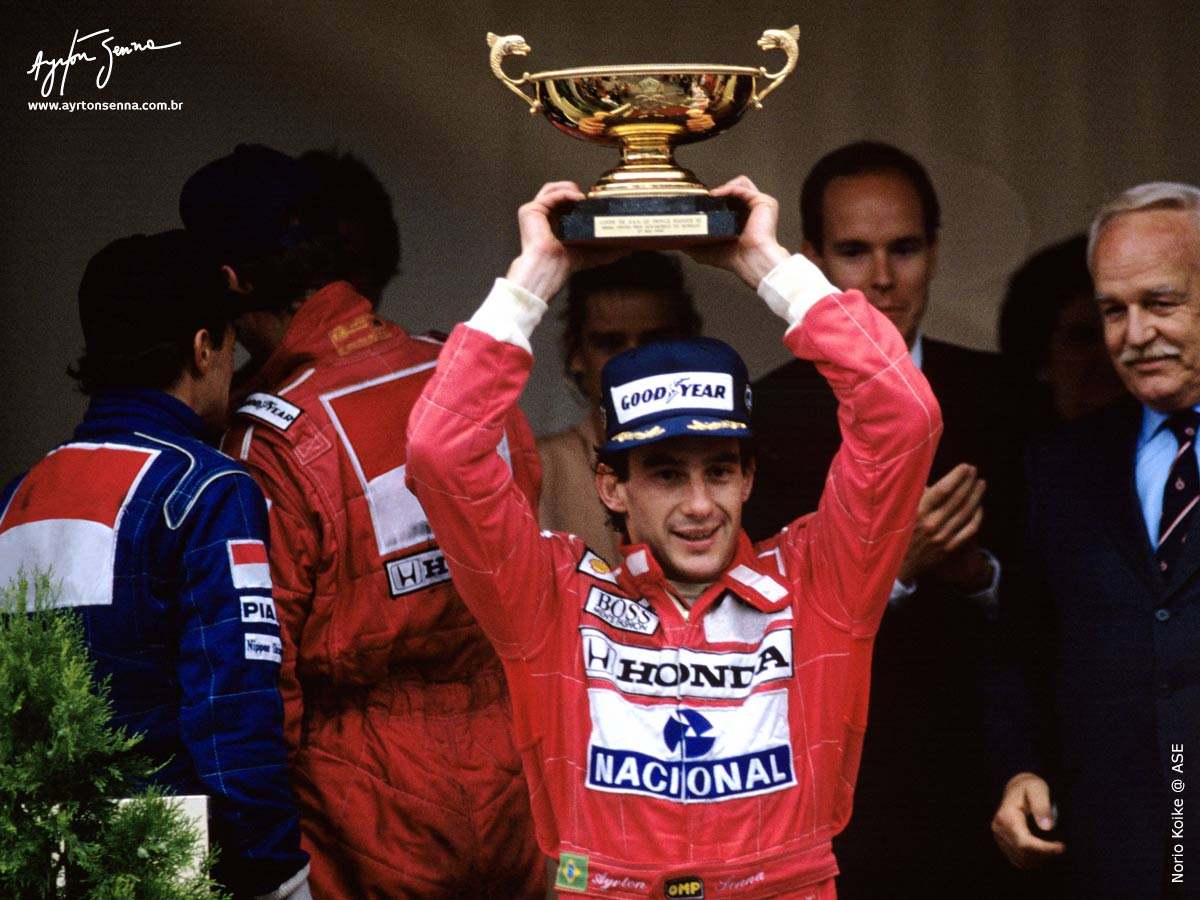
1983 was huge for Ayrton Senna. He was competing in the British Formula 3 Championship, a title he would go on to win. His performance in F3, and in the test sessions with the various F1 teams, had decision-makers itching for his signature. Neither Williams nor McLaren had a vacancy. Lotus’ British sponsor, John Player Special, insisted on a British driver – they retained Nigel Mansell. Similarly, Brabham’s Italian sponsor, Parmalat, wanted an Italian driver and they signed brothers, Teo and Corrado Fabi. Consequently, Senna joined F1 newbies, Tolman. His galactic F1 career began in 1984.
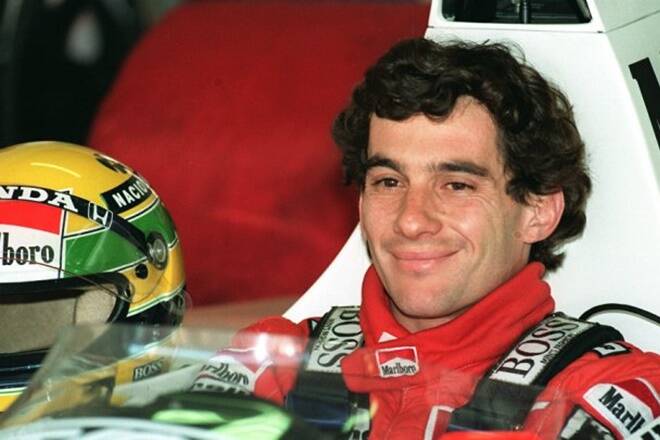
Senna’s debut race, at the Brazilian GP, ended prematurely with an engine failure. But in his second start, in my home hood, Kyalami in South Africa, Ayrton showed his class. In a car not yet fully competitive, Senna finished 6th.
Senna would go on to win the Formula 1 Championship Title in 1988, 1990 and 1991, all with McLaren. He would rack up 41 wins and 80 podiums.
It was clear to the entire racing world, very early on, the Senna was a truly special talent. Formula 1 success, however, has always (not just in this modern era of Mercedes Benz domination) been about both the car and the driver. It has also, therefore, always been difficult to gauge one driver – talent versus talent – against another. In an exhibition race, held in 1984, to celebrate the launch of the reconfigured Nurburgring Circuit, a number of the world’s greatest drivers belted into identical Mercedes Benz 190E 2.3-16 road cars. Ayrton’s greatest rival, Alan Prost, started from pole but Senna took the lead into the first corner and held on to take the win. In like-for-like machinery, and inexperienced at the very top level of motorsport, Senna had landed a sledgehammer blow.
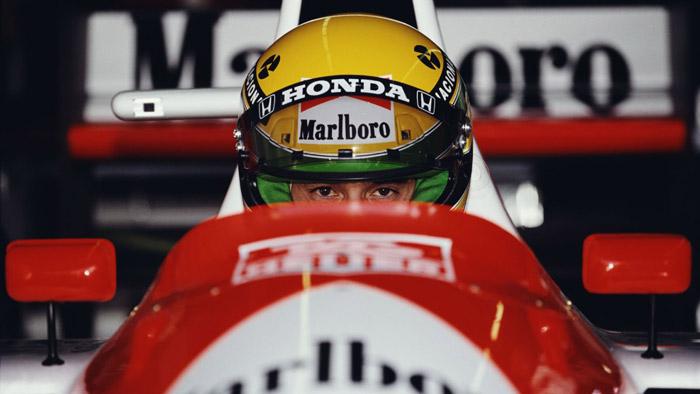
Indeed, the recount of his ‘hero drives’ could fill pages but certainly one of his most memorable was his maiden home victory. It was at the eighth time of asking. A Brazilian GP win had always eluded him. But in 1991, he battled his way to a sensational chequered flag. He took pole and lead from the off but with six laps remaining, his McLaren’s gearbox began eating itself. First fourth gear, then third, then fifth; his gear selection options were becoming extremely limited. With very few low-speed corners at the Interlagos Circuit, and his car in serious trouble, Senna chose to drive the remaining laps in sixth gear alone. Fearing any further action on the gear lever could spell total mechanical meltdown, he adapted his driving style. Remember, a Formula 1 engine and its drivetrain are designed to work at high revs and considerable speed. Sixth gear, out of the slower corners, requires the engine to drop down into a rev-range it really isn’t built for. Racing a car in a single high gear is about maintaining momentum, using the brakes as sparingly as possible, choosing the optimum line through each corner and feathering the clutch pedal, balancing throttle inputs. All the while, negotiating corners and sweeping bends at speeds in excess of 250km/h.
Fortunately, his speed early on had built a gap and while Nigel Mansell, initially, and then Ricardo Patrese were closing him down, his skill and composure were enough to see him across the line in first.
In any motor race, the rain is a great leveler. If the surface isn’t offering up grip, the more powerful cars lose their advantage. Senna was a rain-master and the list of monumental victories in those treacherous conditions is a long one.
Today, the average sedan weighs around 1500kgs with engines producing between 150hp - 250hp. Image not just driving, but racing a 750kg car – with anywhere between 750hp in race setup, and 1300hp for qualifying – on wet surfaces, with two-inch-deep running rivers in places. Almost worse than the moisture on the track is the spray exploding up from the surface as the fat, wet weather racing tyres speed along. The tread patterns are designed to claw away the water, grappling for any and all available grip. The resulting wet haze makes forward visibility for the driver following all but impossible. You’re driving at ridiculous speeds, homing in on a braking point demarcated by a sign you can hardly see. Your job is to pass the car in front of you. But you can’t see it. All you can see is the spray. There are no windscreens on Formula 1 cars, let alone windscreen wipers. You also know that the driver of the car you’re chasing may very well change his line into the corner in an attempt to stop you from overtaking.
It is in these conditions that Ayrton Senna thrived. Why he was gifted more courage, greater finesse, quicker reactions and sharper instincts – even than the other ultra-talented, champion drivers around him – I certainly cannot explain.
What I do know, and this relates to Senna and Stevie Ray Vaughn, is that every now and then, the world is blessed with someone who stands head and shoulders above even the most gifted. In SRV’s case, he took a commonly held set of techniques, tones and musical scales, and developed a sound. He created a voice that any guitar fan would identify from a country mile away and that thousands of players, myself included, have tried to emulate. It isn’t the notes; it’s the way they’re delivered – through the fingers but fired by the soul. It isn’t the speed or complexity; it’s the amalgamation of melody, mood and energy – chartable on music manuscript but impossible to describe.
Ayrton’s ability to feel, in his gloved hands on that small steering wheel, and through his backside, wedged in the form-fitting race seat, how the car was reacting, was astounding. But that, and his ability to respond accordingly, were mere prerequisites for entry into Formula 1. That level of skill was a given. Senna’s genius, his true gift, was a level of car control bordering on the supernatural. And his competitive energy was matched only by his hardened, steely nerve.
Stevie Ray Vaughn died in a helicopter crash on the 27th of August 1990. Pilot error – Stevie was not at the controls – is listed as the cause. Ayrton passed away following a crash at Imola on the 1st of May 1994. A mechanical malfunction, more specifically a steering system failure, is said to have caused his Williams to spear off into the concrete wall.
I can’t remember which one of those deaths affected me more. I was 18 when SRV died and 22 when Senna crashed. I know, both times, I found a quiet corner, and I wept. I know I demanded to understand why, both times. And I know no one could explain it. Today, I know this: very often, the brightest flames just simply cannot be sustained.
